
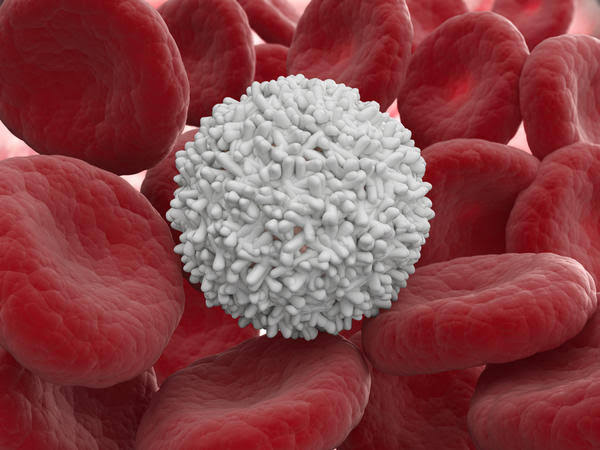
White blood cells (WBCs), or leukocytes, are the body’s defence or immune system. In a normal adult body there are 4,000 to 10,000 (average 7,000) WBCs per microliter of blood. When the number of WBCs in your blood increases, this is a sign of an infection somewhere in your body.
There are five types of white cells produced by our bone marrow –
• Neutrophils: This cell is the most abundant, compromising over 62% of the total white cells. These are the first to attack infections.
• Eosinophils: This cell is the one that reacts to allergies. They attack the toxin before it attacks us.
• Basophils: This cell is the rarest of the white cells. These cells release histamine, which signals the other white cells to gather in the infected area. They also produce heparin, which dissolves clots.
• Lymphocytes: These not only fight infections but also provide immunity to certain diseases. Remember all your booster shots as a child? These cells produce antibodies that are so important to us.
• Monocytes: This last type goes into an area after the infection has been killed and clean up the debris and damage left behind. It is the largest type of white cell found in the human body.


 LEARNING BUG